Psalm 134, 146–150

Yesterday we were in the temple with Solomon, celebrating the faithfulness of God. Right in the middle of his dedication prayer (2nd Chronicles 6:18), he says something that keeps us grounded:
“But will God indeed dwell with mankind on the earth? Behold, heaven and the highest heaven cannot contain You; how much less this house which I have built.”
On the day he dedicates the most amazing structure ever built, he makes sure we don’t get carried away. The God this temple points to can’t be contained. His glory is too great.
That’s the point today’s reading makes. God alone is worthy of praise.
Psalm 134 points to it subtly. The most important thing that ever happened at the temple didn’t happen on the crowded festival day, when the courts were packed and everybody was watching. It happened at night:
“Behold, bless the LORD, all servants of the LORD, who serve by night in the house of the LORD!”
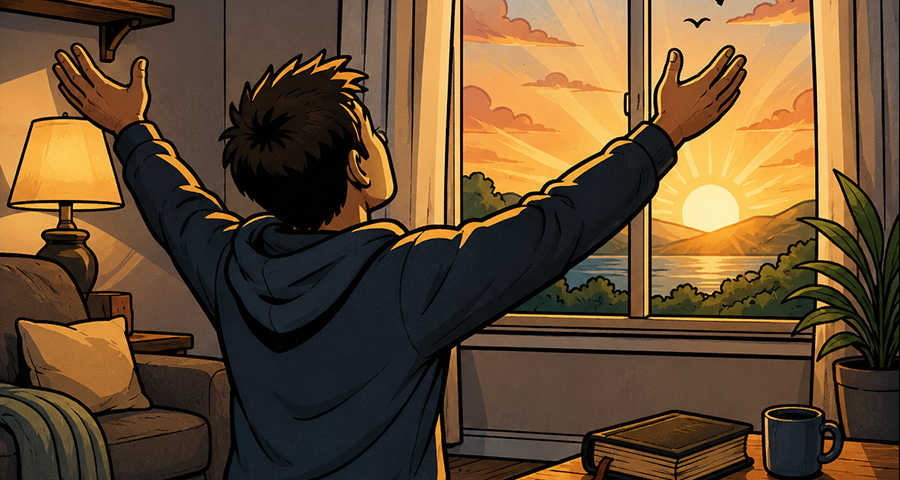
The dedication is over. The crowds have gone home. The lights are down. And the only ones left are the servants keeping watch through the dark… and they lift up their hands and bless the Lord. That’s genuine praise. Real worship isn’t done for crowds—it’s what you do in an empty house in the early hours when no one is watching.
That sets the stage for the final five chapters.
Take note: they each open and close with the same word—Hallelujah. It’s a compound Hebrew word: hallelu (“praise”) and Yah (the shortened name of the Lord). Praise the Lord!
In Psalm 146 we’re instructed to trust God, not man.
“Do not trust in princes, in mortal man, in whom there is no salvation.”
Man fades. The Lord is forever. Trust God. Worship God. Not the prince. Not the platform. Not the man.
In Psalm 147 we’re reminded that He is our provider. He covers the heavens with clouds, prepares rain for the earth, makes the grass grow, feeds the beast. Israel credited Him with all of it. We live in an age that loves to explain how all of "it" scientifically happens. In all our explaining, we’ve robbed God of the wonder that belongs to Him.
DON'T!
Understanding the how was never meant to erase the Who.
In Psalm 148 He is pointed to as Creator and life-giver. Everything He made is commanded to praise Him—sun and moon, stars, sea creatures, fire and hail, mountains, beasts, kings and every last person. Don't miss what Creater-God does in verse 14,
“He has lifted up a horn for His people.”
In Hebrew, a horn is strength and dignity. The Creator of all that is, paid attention and blessed His people.
In Psalm 149 we’re taught that there’s only one real option in this life: You either give God the glory due Him, or you stand against Him.
“Let the high praises of God be in their mouth, and a two-edged sword in their hand.”
There’s no neutral seat in this life.
And finally, Psalm 150 is the climax. Count how many times “praise” appears in this chapter. Thirteen. Praise Him with trumpet and harp, tambourine and dance, strings and cymbals. Hold nothing back. And then the last line of the entire book,
“Let everything that has breath praise the Lord. Praise the Lord!”
That word “breath” (neshamah) is the same breath God breathed into Adam’s nostrils. Every lungful you’ve ever drawn was on loan from God. The breath He gave is the breath you owe back to Him. All glory is deservedly His. All of it.
Takeaway. Before you close this and rush to the next thing…
DON'T!
Stop. Breathe. And when nobody’s watching, when there’s no crowd to perform for, let the breath He gave you go back to Him. This morning I worshiped along with Brandon Lake, Chris Brown, and Chandler Moore (LET EVERY BREATH PRAISE). There’s a time to study God’s Word… and there’s a time to just obey it. This is the obey-it part.
Let everything that has breath praise the Lord.