June 23, 1st Kings 12–14

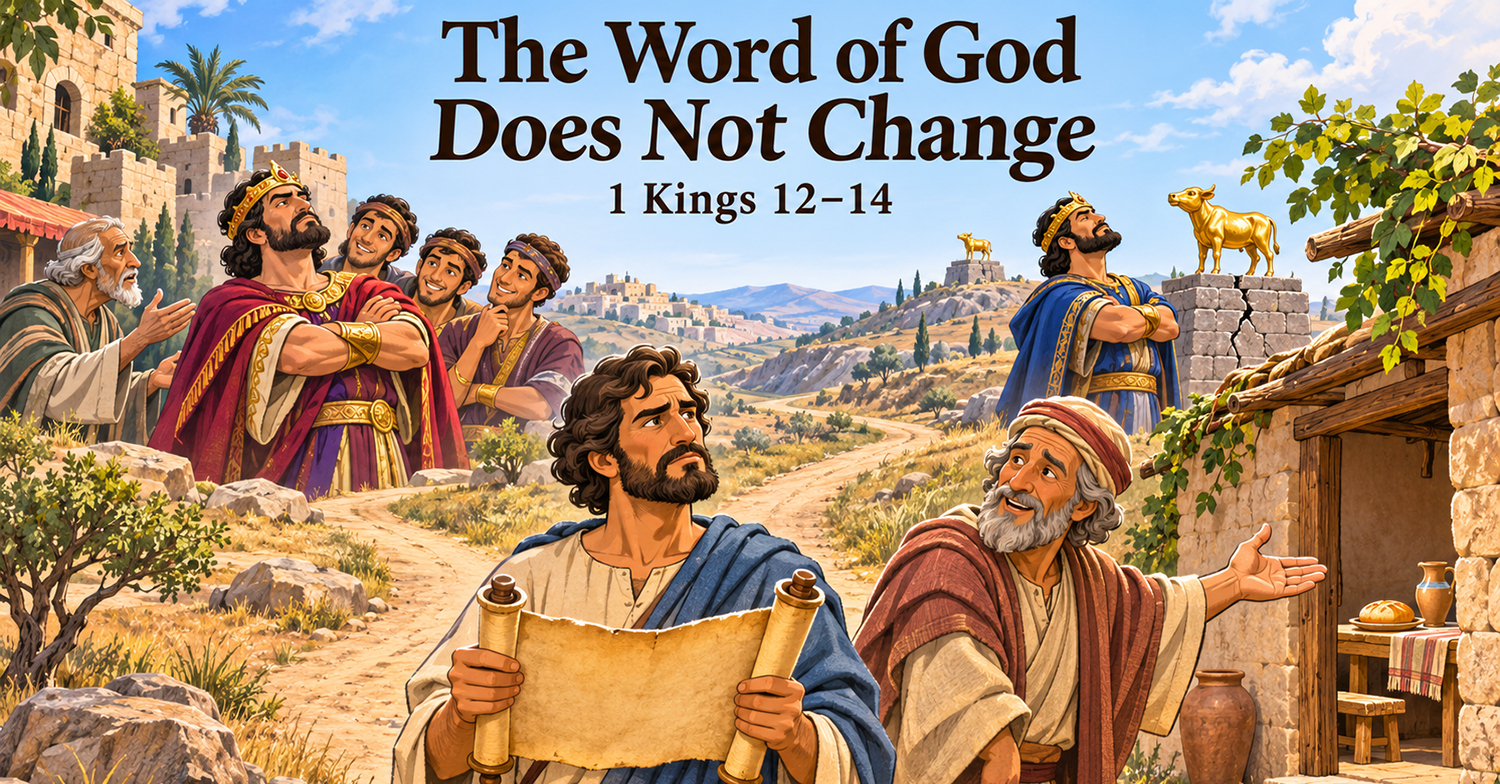
This morning’s reading was 1st Kings 12–14. It’s a sad chapter in Israel’s history. Under David’s grandson, the kingdom divides, and both sides turn away from the Lord God.
Rehoboam, son of Solomon, began his reign with a heavy hand, determined to show the people who was in charge. His response was rooted in pride. He rejected the counsel of the elders who had served his father and listened instead to the foolish counsel of his peers. The ten northern tribes rejected him, leaving him with Judah and Benjamin. One bright spot came when a man of God instructed Rehoboam and his people not to go to war against their northern brothers. This time, they listened.
Meanwhile, Jeroboam returned from Egypt, where he had taken refuge from Solomon. Remember, God had already declared through a prophet that Jeroboam would become king over ten of Israel’s twelve tribes. Now, with Solomon dead, that prophecy came true.
Jeroboam had been handed a great opportunity. But rather than trusting the God who had given him the kingdom, he tried to secure it himself. Afraid that worshiping in Jerusalem would draw the people back to Rehoboam, he established two places of worship with two idols—golden calves!
He must not have done well in his history classes. We can already see the writing on this wall.
Within this account is another story that caught my attention. An unnamed man of God came from Judah to speak against Jeroboam’s altar. In 13:2–3, he declared:
“O altar, altar, thus says the LORD, ‘Behold, a son shall be born to the house of David, Josiah by name; and on you he shall sacrifice the priests of the high places who burn incense on you, and human bones shall be burned on you.’”
Then he gave a sign the same day, saying, “This is the sign which the LORD has spoken, ‘Behold, the altar shall be split apart and the ashes which are on it shall be poured out.’”
Jeroboam angrily stretched out his hand and ordered the man’s arrest. Immediately, his hand withered so that he could not draw it back. He then asked the man of God to pray for his healing, and God restored his hand.
Afterward, Jeroboam invited him home for refreshments and a reward. But the man refused. God had specifically instructed him not to eat bread or drink water there, or return by the same route.
Then an old prophet living in Bethel entered the picture. He pursued the man from Judah and lied to him, claiming that an angel had brought instructions from the Lord permitting him to return to the old prophet’s home and eat.
The man believed him.
That made me think of Balaam in Numbers 23. Even this pagan diviner spoke a truth that the man from Judah needed to remember. Verse 19 says:
“God is not a man, that He should lie, Nor a son of man, that He should repent; Has He said, and will He not do it? Or has He spoken, and will He not make it good?”
Someone claiming to speak for God does not make his words God’s words.
The man from Judah never reached home. A lion killed him after he accepted another man’s claim over God’s clear command. Rehoboam’s pride led him to reject wise counsel, costing him much of his kingdom. And Jeroboam’s efforts to preserve his rule brought judgment on his household. As 1st Kings 13:34 says:
“This event became sin to the house of Jeroboam, even to blot it out and destroy it from off the face of the earth.”
Different people, different circumstances, but the same question: Whose counsel will we follow?
Takeaway: Keep watch over your way, and make sure it aligns with God’s Word. Neither popular advice nor someone’s claim to speak for God can overturn what He has said. What seems good in the short term will never win out over God’s Word.