Jesus Loves Us to the End

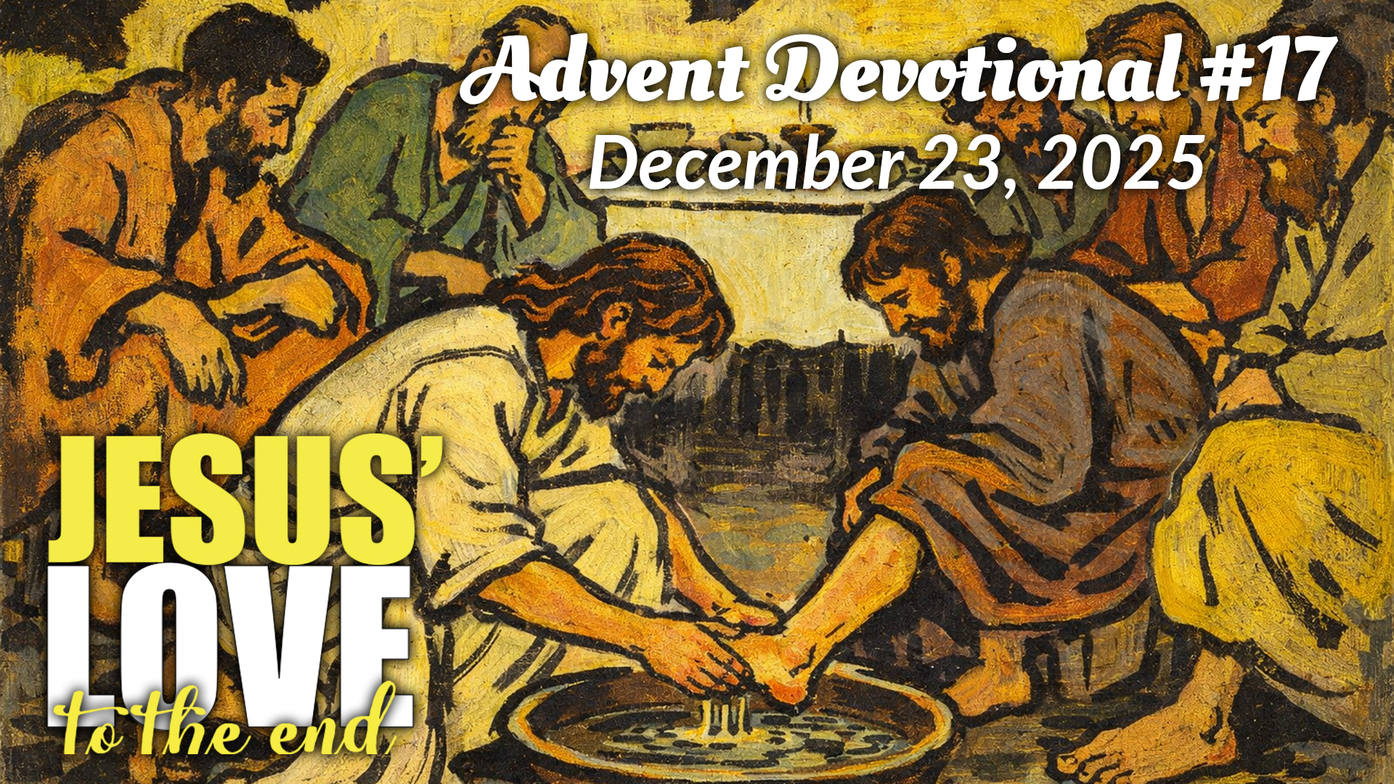
Now before the Feast of the Passover, Jesus, knowing that His hour had come and that He would depart out of this world to the Father—having loved His own who were in the world—loved them to the end. During supper, the devil having already put into the heart of Judas Iscariot, the son of Simon, to betray Him, Jesus, knowing that the Father had given all things into His hands, and that He had come forth from God and was going back to God, got up from supper and laid aside His garments; and taking a towel, He girded Himself. Then He poured water into the basin and began to wash the disciples’ feet and to wipe them with the towel with which He was girded. … So when He had washed their feet, taken His garments, and reclined at the table again, He said to them, “Do you know what I have done to you? You call Me Teacher and Lord; and you are right, for so I am. If I then, the Lord and the Teacher, washed your feet, you also ought to wash one another’s feet. For I gave you an example that you also should do as I did to you.” John 13:1–5, 12–15
John tells us something striking before he tells us anything practical.
“Having loved His own who were in the world, He loved them to the end.”
Before Jesus begins washing His disciples’ feet, John anchors the moment in love.
This is not a random act of kindness or a last-minute object lesson. Jesus knows exactly what time it is. He knows His hour has come. He knows where He came from and where He is going. He knows Judas is already set on betrayal. And He knows that the Father has placed all things into His hands.
In other words, nothing about this moment is random for Jesus.
And because He knows all of this—because He is fully aware, fully secure, fully loved by the Father—He gets up from the table.
Jesus lays aside outer garments and takes on the appearance of a servant. He is left wearing the simple tunic depicting the working clothes of a servant and He wraps Himself with a towel and goes to work. The One known by the group as Teacher and Lord deliberately empties Himself again of authority and dresses Himself in humility, just like He did when He came as a baby (Philippians 2:7).
He begins to wash His disciples’ feet, including Judas’s. Jesus doesn’t wash feet because His disciples deserved it. He washes feet because love does what humility requires. The feet of Judas are not skipped. Jesus lives out what He had already taught in Matthew 5:44:
“Love your enemies and pray for those who persecute you.”
This love is not sentimental or a response to Judas’s love for Him. It is intentional and initiating. It moves toward people even when they are moving away from Him.
Afterward, Jesus puts His outer garments back on, returns to the table, and asks a seemingly simple question,
“Do you know what I have done to you?”
He brings His actions back around to them by explaining the expectation—the command—that He desires of them,
“If I then, the Lord and the Teacher, washed your feet, you also ought to wash one another’s feet.”
This is not about reenacting a ritual once or twice a year in the church. This is about realigning our motivation. Jesus makes it absolutely clear: there is no task beneath a leader who follows Him. Authority in His kingdom does not excuse humility motivated by love; it demands it.
That night, two paths have already formed in the room:
- There are the eleven—confused, slow to understand, but still willing to stay, listen, and follow.
- And there is Judas—convinced he knows better, unwilling to submit, already moving toward a plan of his own making.
The way we respond to Jesus’s teaching still divides us in the same way. We may not betray Him outright, but we can rationalize obedience, delay submission, or decide certain commands don’t apply to us. We can tell ourselves we’ll follow fully later. In essence, we can choose to leave the room early. … Or we can stay.
Stay long enough to be shaped.
Stay long enough to learn humility.
Stay long enough to be transformed by resurrection power rather than walking away to do things our own way.
The question this passage asks is not whether Jesus loves us—He loved us to the end. The question is whether we will allow that love to shape our obedience, our humility, and the way we love those around us.
Will you leave the room early? Or will you lean into Jesus, step out of your comfort zone, and do what He desires?