Hope that Strengthens Faith

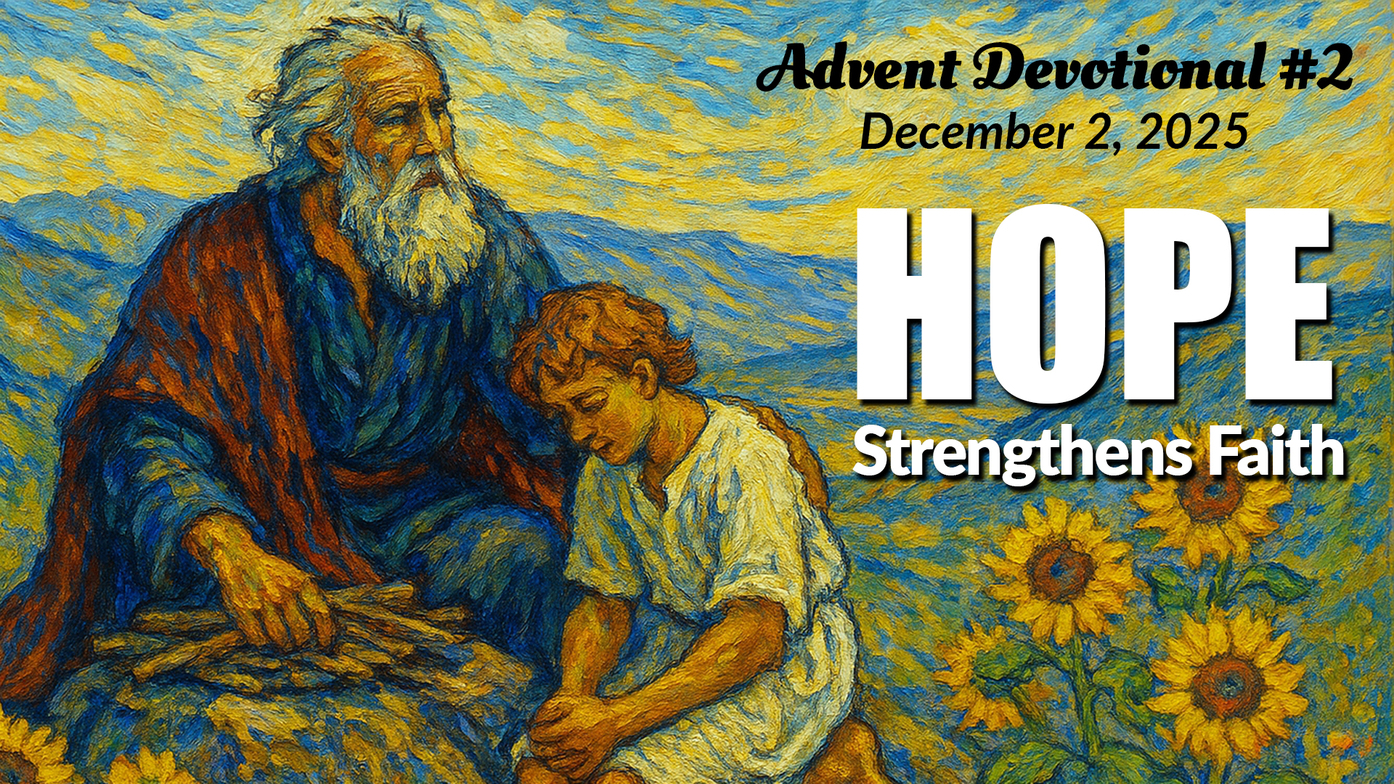
Abraham is the father of all who believe. That is what the Scriptures mean when God told him, “I have made you the father of many nations.” This happened because Abraham believed in the God who brings the dead back to life and who creates new things out of nothing. Even when there was no reason for hope, Abraham kept hoping—believing that he would become the father of many nations. For God had said to him, “That’s how many descendants you will have!” And Abraham’s faith did not weaken, even though, at about 100 years of age, he figured his body was as good as dead—and so was Sarah’s womb. Abraham never wavered in believing God’s promise. In fact, his faith grew stronger, and in this he brought glory to God. He was fully convinced that God is able to do whatever he promises. Romans 4:16b–21
Savior and Lord
My hope is that you have received Jesus as both your Savior and Lord—that you believe His perfect life, sacrificial death, and victorious resurrection have opened the way for you to be forgiven, restored to God, and given eternal life rather than eternal punishment. This is what it means for Him to be Savior. Once a person truly grasps the extravagant love of God shown in Christ, there is only one fitting response: to worship Him through obedience, surrender, and devotion. This is what it means for Him to be Lord.
The Hope of Abraham's Children
And this is also what Scripture means when it refers to someone as a true child of Abraham (see Romans 4, Galatians 3:7, 29; John 8:31–33). A true child of Abraham does not simply share his bloodline—it is someone who shares his faith.
Throughout his life, Abraham repeatedly demonstrated the HOPE he had in God’s promises when obedience seemed unreasonable.
- When God called him away from his homeland with a promise to bless the whole world through him (Genesis 12:1–3), Abraham went.
- When God commanded him to sacrifice Isaac, he obeyed—believing God would provide a substitutionary lamb (Genesis 22:2, 8).
- And perhaps the greatest test of all: he believed God’s promise of countless descendants even though he and Sarah were well past childbearing years.
Abraham’s hope in God’s promises shaped the entire course of his life. His faith became a living hope—a hope that produced incredible spiritual markers—experiences that only God could bring about in His life.
During Christ’s life, something remarkable was unfolding: the “family” of Abraham was expanding beyond physical descent. Many of Abraham’s biological descendants stumbled in unbelief and did not receive Jesus as the promised Messiah (John 1:11; 5:39–40; 12:37–43; Matthew 21:42–43). Yet God opened the door wide for people of every nation to become true children of Abraham by faith in Jesus Christ (Romans 11:25).
Hope When There Is No Reason to Hope
I share this because the same hope that marked Abraham’s life can shape ours. When we place our trust in God’s Word and anchor our lives in His promises, we too are given spiritual markers—moments of God’s faithfulness—that become significant benchmarks of grace in our story.
And notice the powerful progression described in Romans 4:20–21:
“Abraham never wavered in believing God’s promise. In fact, his faith grew stronger, and in this he brought glory to God. He was fully convinced that God is able to do whatever He promises.”
Hope, when practiced daily, compounds. --> Obedience strengthens faith. --> Faith honors God. --> And God delights to reveal Himself to those who trust Him.
A Thought to Meditate On
When we embrace God’s truth and cling to His promises, our faith grows stronger—and so does our hope. This is worship. And it is the pathway to deeper intimacy with the God who fulfills every promise.